
A Place for Pride 2026: The collapse of pride in Britain – where to find it and how to rebuild it
In 2011, the Demos report ‘A Place for Pride’ warned that mainstream politics ignored the human yearning for pride at its peril. Failing to connect emotionally with citizens, it argued, would fuel a growing ‘pessimism gap’ between the public and the political system. The research identified a self-reinforcing ‘Chain of Pride’: daily local experiences shape pride in community, which in turn shapes pride in institutions and the nation and, ultimately, engagement with democracy. Pride, on this account, is not simply an emotional by-product. It is the relational oil in our democratic system: anchoring and sustaining the relationship between citizen and state, between citizen and institutions, and between citizens themselves.
Fifteen years on, that 2011 warning has been starkly realised. New nationally representative polling finds that national pride has plummeted but local pride has risen.
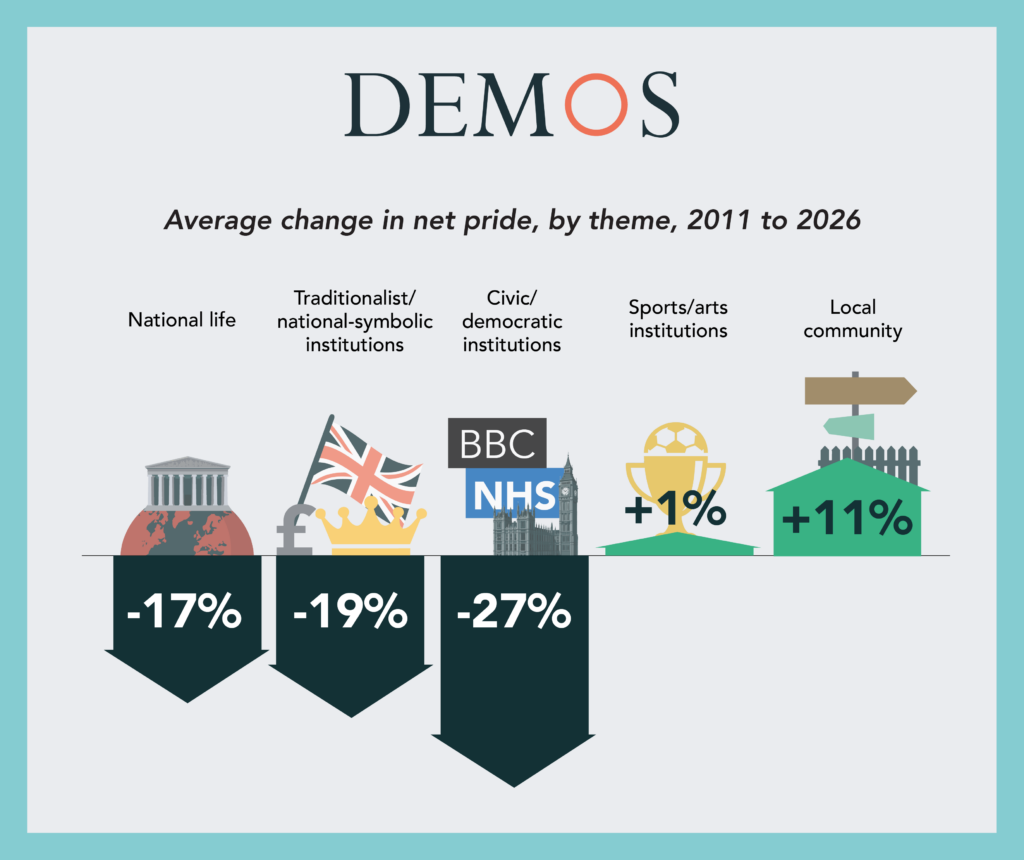
The polling shows that:
- Net agreement with being proud to be a British citizen has fallen from 74% in 2011 to 47% in 2026.
- Pride in British history has fallen from 65% to 39%.
- Pride in Britain’s place in the world has dropped from 35% to just 13%.
- But pride in local communities has increased from 29% to 40%, alongside a slight increase in neighbourhood trust.
The research also points to a drastic decline in pride in Britain’s major national institutions.
Since 2011:
- Pride in Parliament has fallen from 23% to -11%.
- Pride in the BBC has fallen from 48% to -11%.
- Pride in the monarchy has fallen from 54% to 25%.
The report sets out a new agenda to rebuild Britain’s fragmented ‘Chain of Pride’: strengthening the Local, Institutional and National Bridges that connect people to their communities, institutions and country, in turn, restoring trust between citizen and state.