
Beyond the usual suspects
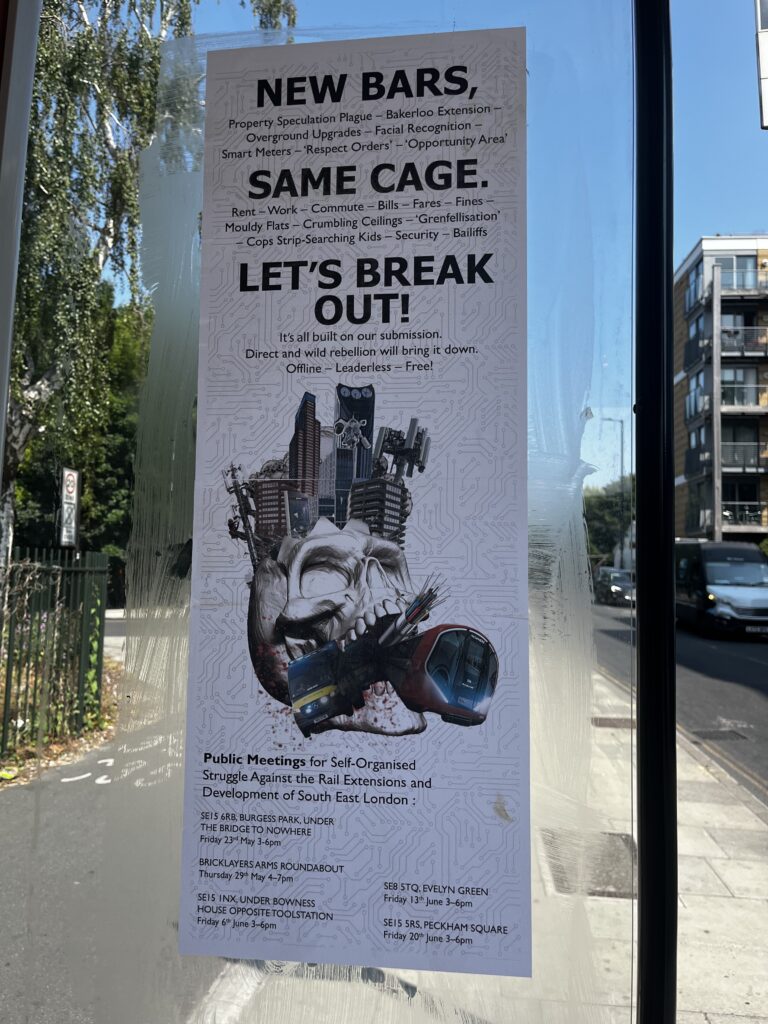
This poster, hastily pasted onto bus stops and walls, appeared in my local area earlier this summer. It immediately caught my eye and I quickly took this photo before my bus turned up. I could feel the energy and passion come crackling off the page.
What made the poster so compelling?
The striking visual design with more than a whiff of death and violence dramatically thrown in (look closely and you’ll see blood spatters) certainly helped. The despair and palpable anger it conveyed at the deep injustices people are experiencing – the dangerous housing, the crippling cost of living, the empty daily grind – that made it stand out too. As did its sense of the dehumanising powerlessness of living in a world that changes around you, without your input and without any benefits coming your way. It was the startling combination of complaints, where smart meters, the proposed Bakerloo line extension and bailiffs are all experienced as part of the same problem. It was also the sneering tone towards Respect Orders and Opportunity Areas, casting them as oppressive, jargonistic and exclusionary initiatives. It was the feeling it conveyed that no one with power is on your side. And the deep distrust it displayed towards…well everyone. TfL, the council, the government, big business, the Home Office, the Mayor of London, the police, landlords.
But there was something else that really elevated the message for me. It’s the hope. This poster is not just a list of concerns or straightforward NIMBYism. It’s a rallying cry to fellow citizens to engage with the world; to wrestle back control; to build something new.
I was annoyed to miss the opportunity to go along to one of the meetings advertised. I would have loved to have met with the organisers to understand more about their cause and to see who else in the community they had inspired. But the poster has stuck with me over the summer nevertheless.
It has made me think again about the pain and frustration that people are feeling but who no longer turn to our democratic institutions or processes to help. Councils, MPs, national government – in fact every public body that attempts to enter into a dialogue with the public – struggle to engage anyone other than the ‘usual suspects’.
Mention this term to a council officer, and they’ll picture the handful of residents who turn up at every consultation, object to every planning application, and fill their inbox with the same complaints. Mention it to an MP, and they’ll think of the small group of constituents they’re on first-name terms with – the local campaigners, the frequent petitioners, and the serial letter-writers.
Now I could be wrong, but I suspect the people who designed this poster and went along to the public meetings were not who we would call ‘the usual suspects’. Or to pick another completely different example of disaffection – the painters and hangers of the St. George’s crosses that have appeared on bridges, roundabouts and streets up and down the country over recent weeks. How many of those people have responded to a consultation or voted in a local election? I suspect a vanishingly small minority.
What is increasingly clear is that there are huge swells of emotion coursing through the demos, looking for release. But people are not turning to traditional democratic touchpoints to voice their concerns or to seek change. Nor are they listening to mainstream leaders for solutions.
We need to meet this moment if we wish our democracy to survive it. Without the engagement of the public, the ability to use our democratic system to effect positive social change withers and dies. To reverse the democratic doom loop we need to radically remake the relationship between citizen and state. We need to re-examine the critical touchpoints – between MPs and their constituents, between councillors and their residents, between frontline service providers and their users. We need to come up with bold and practical changes that enable our elected representatives and public bodies to actually understand and respond to what’s going on in their communities. We need to find new ways to reach out to people. New ways to inspire them. We need to listen to the stories they tell and the problems they experience, even when these don’t fit neatly into the policy silos we have created or the political ideologies we are used to.
So, let’s think bold and let’s think radical. Or in other words: “Let’s break out!”
If you are interested in working with us to develop new solutions to the democratic emergency we are facing, then get in touch with [email protected].
We are publishing a new report ‘It’s a two-way street’ next week, looking at the relationship between MPs and their constituents and proposing a new model of engagement. If you would like a briefing on the findings or to find out more about our model, please get in touch.